
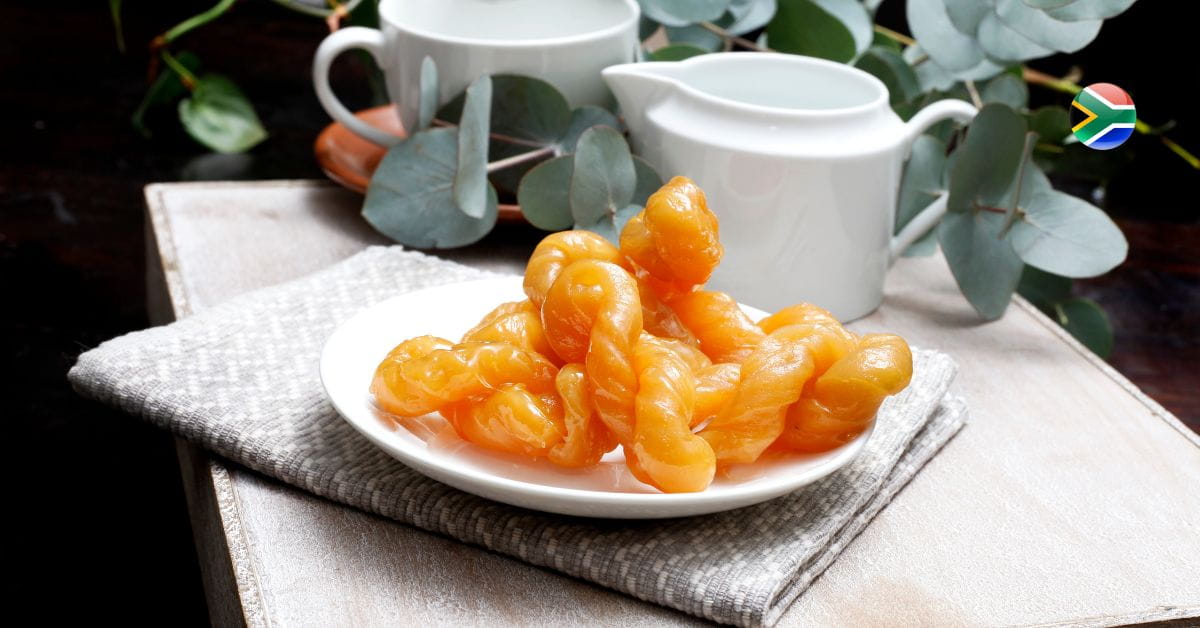
Distance has a funny way of sharpening taste buds for memory. For SAFFAs, certain foods don’t just feed nostalgia; they unlock it. The koeksister is one of those rare creations that does both in a single bite. Crisp, sticky, and unapologetically sweet, it carries you straight back to a church bazaar, a family braai, or your ouma’s kitchen on a Sunday afternoon
The trouble is, koeksisters aren’t always easy to find once you’ve left South Africa. You might search “koeksisters near me” only to come up empty-handed, or pay a small fortune at a specialty shop. The good news? You don’t need to. With a bit of patience and a few simple ingredients, you can make traditional koeksisters in your own kitchen, wherever in the world you happen to be.
What is the history of South African koeksisters?
The koeksister is one of the most recognisable South African desserts, with roots that stretch back to the early Dutch settlers at the Cape. The name comes from the Dutch word koekje, meaning “cookie” or “little cake.” Over generations, the recipe evolved into the sticky, braided treat we know today.
The Afrikaner version, which this recipe covers, is a plaited dough that’s deep-fried and then plunged into a cold, spiced syrup laced with cinnamon, lemon and ginger. The contrast between the warm, crispy dough and the icy syrup is what gives koeksisters their signature crunch on the outside and gooey sweetness within.
Koeksisters became a fixture at community gatherings, school fêtes and church bazaars across South Africa. They’re celebration food, the sort of thing you make for birthdays, holidays, or simply because it’s a Saturday and you fancy something sweet.
Koeksister vs koesister: what’s the difference?
While the words look almost identical, koeksisters and koesisters are two distinct treats.
The Afrikaner koeksister is a braided, deep-fried dough soaked in cold syrup, making it crisp on the outside. The Cape Malay koesister is a spiced, cakey dough flavoured with cardamom and cinnamon, rolled in coconut after being fried and dipped in syrup.
This recipe focuses on the classic braided koeksister.
How do you make traditional koeksisters at home?
This recipe makes roughly 14 koeksisters and takes about 1 hour and 20 minutes in total, including resting time. The single most important rule? Your syrup must be ice-cold before the hot koeksisters go in. That temperature shock is what locks in the crunch.
Ingredients
For the syrup:
- 1 cup (236ml) water
- 2 cups (400g) granulated sugar
- 1 tablespoon (8–9g) fresh ginger, chopped
- 1 cinnamon stick
- ½ lemon, juiced
- 1¼ teaspoons (7–8g) cream of tartar
- ½ teaspoon (3g) salt (optional)
For the dough:
- 1½ cups (180g) all-purpose flour
- 1 cup (117g) corn flour (not cornmeal)
- 2½ teaspoons (10g) baking powder
- ¾ teaspoon (4g) salt
- 2 tablespoons (24g) sugar (optional)
- 2 tablespoons (25g) butter, softened
- 1 large egg
- ½ cup (118ml) milk
- Cooking oil, for deep frying
Step-by-step method
- Make the syrup first. Combine the water, sugar, salt, cream of tartar, ginger, lemon juice, and cinnamon stick in a medium saucepan. Bring the mixture to a boil, then reduce the heat and let it simmer for around 10 minutes, stirring every so often. Remove from the heat and allow it to cool completely before chilling it in the refrigerator. This step can be done a day ahead.
- Mix the dough. In a large bowl, combine the flour, corn flour, baking powder, salt and optional sugar. Rub in the softened butter with your hands, then add the egg and milk. Knead a few times until everything comes together into a smooth dough.
- Rest the dough. Cover and let it rest for about 30 minutes. It should form a smooth ball that’s easy to handle.
- Roll and cut. Lightly flour your work surface and roll the dough out to about 1 inch thick. Cut it into three sections, then slice each section into thin strips.
- Braid the strips. Take three strands and stretch them gently until even in thickness. Pinch them together at one end, then braid: left strand over the middle, then right strand over the middle. Pinch the other end to seal.
- Heat the oil. Heat at least 3 inches of vegetable oil to 350°F (180°C). Test it by dropping in a small piece of dough, if it rises and sizzles, you’re ready.
- Fry until golden. Gently lower the koeksisters into the oil. Fry for a few minutes until the bottom is golden, then turn and fry the other side until golden brown.
- Dunk in the cold syrup. Using a slotted spoon, lift the koeksisters out and let the excess oil drain. Place them straight into the chilled syrup and soak for a few minutes, but not so long that they go soggy.
- Cool and serve. Transfer to a cooling rack and let them cool completely before eating. Brew some rooibos and enjoy.
Tips for the best koeksister syrup and crunch
- If your syrup has been refrigerated, that’s perfect, you want it cold for the temperature contrast.
- Don’t over-soak. A few minutes in the syrup is plenty; any longer and the crispness disappears.
- Make ahead easily. You can shape the koeksisters the day before and fry them fresh the next day.
- Already soaked koeksisters keep for a couple of days in the fridge or up to three months in the freezer.
Koeksister: A taste that bridges oceans and memory
Making koeksisters abroad is about more than satisfying a sweet craving. It’s a way to keep a piece of South African heritage alive in your new home, and to share it with the people around you. Invite the kids to help with the braiding, hand a plate to your neighbours, or surprise fellow expats at your next get-together.
The first batch might not look like ouma’s, but that’s part of the fun. Keep practising, tweak the syrup spices to your taste, and before long you’ll have a recipe that tastes like home no matter where you are.
If this stirred up a longing for the flavours of South Africa, why not make a weekend of it? Pair your koeksisters with a pot of moerkoffie, dig out a few more traditional South African desserts, and bring a little bit of the Cape to your corner of the world.
FinGlobal: tax emigration specialists for South African expats
If this koeksister recipe has stirred up a little homesick nostalgia, it might also be the perfect moment to sort out the practical side of living between countries with a bit more ease and clarity through our services.
We can provide advice and guidance on financial emigration, tax emigration, retirement annuity withdrawal, FOREX, tax refunds, tax clearance, exchange control, and much more. We have a decade of experience in the industry and pride ourselves on keeping up to date with the latest regulations and rules in the business.
If you’d like to chat with a knowledgeable consultant, take the time to get in touch with us. You can give us a call at +27 28 313 5600 or email us at info@finglobal.com at your convenience, and one of our friendly consultants will assist you further.
If this koeksister recipe has stirred up a little homesick nostalgia, it might also be the perfect moment to sort out the practical side of living between countries with a bit more ease and clarity through our services.