


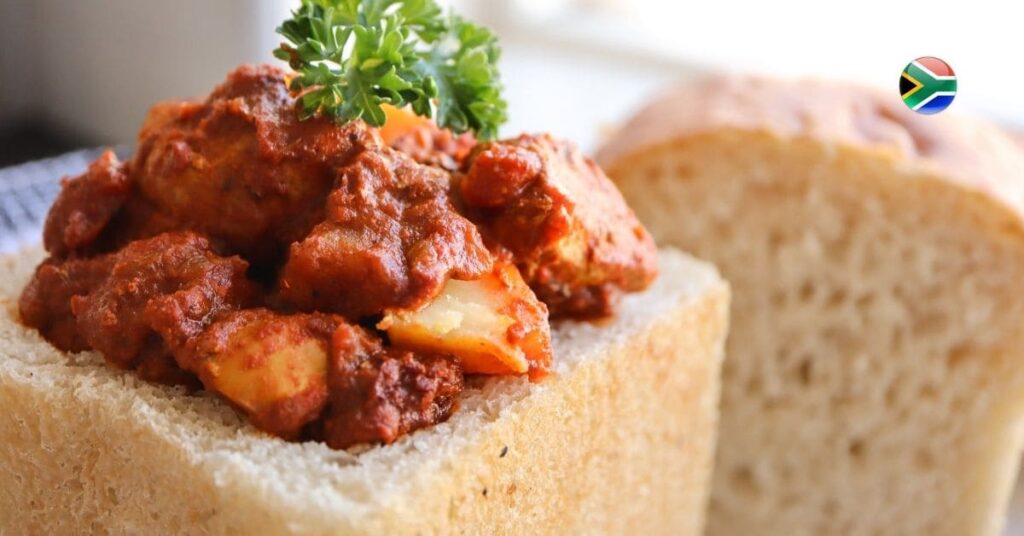
Craving a taste of home? You can take the Saffa out of SA, but you can’t take the craving for a good bunny chow out of the Saffa. Don’t let the name fool your new friends—no rabbits are harmed in the making of this legendary South African dish
Instead, this iconic street food features a rich, aromatic Durban curry ladled generously into a hollowed-out loaf of white bread. It’s hearty, messy, and absolutely delicious.
Whether you are reminiscing about a trip to South Africa or just want to try something bold and new in your kitchen, this bunny chow recipe is your ticket to flavour town.
What exactly is Bunny Chow?
For the uninitiated, a “bunny” consists of a hollowed-out quarter, half, or even full loaf of white bread filled with spicy curry. The piece of soft bread removed from the center—affectionately called the “virgin”—is placed on top or served on the side.
The best way to eat it? With your hands. This is tactile dining at its finest. You tear off pieces of the bread walls and the “virgin” to scoop up the curry. Cutlery is strictly forbidden if you want the authentic experience.
A quick history lesson on the Bunny Chow recipe
There are several theories about the origins of this dish, but most agree it relates to Durban’s Indian community in the 1940s.
- The name: It likely comes from “Bania,” a caste of Indian merchants who sold the curry.
- The vessel: Laborers working on sugar cane plantations needed a way to carry their lunch. Hollowed-out bread served as an edible, portable lunchbox that held the curry without leaking.
Essential Bunny Chow ingredients
To make a standout bunny chow curry, you need to focus on two main components: the bread and the aromatic spice blend.
The Right Bunny Chow Bread
In South Africa, the traditional choice is a “government loaf”—a standard, unsliced white sandwich loaf with flat, square ends.
- Why square? The flat bottom allows the bunny to stand upright on a plate.
- The structure: The crust acts as a bowl, holding the heavy sauce in place.
- Alternatives: If you can’t find a square uncut loaf, a sturdy cob or dense white roll can work, though purists might disagree!
The protein
This specific recipe uses chicken, but bunny chow fillings are versatile.
- Chicken thighs: Use boneless, skinless thighs. They remain juicy and tender during the cook, whereas breasts often dry out.
- Lamb: A classic alternative. Just increase the cooking time by about 20 minutes to tenderize the meat.
- Vegetarian: Beans (often butter beans) or mixed vegetables make for a delicious meat-free version.
The spices
Durban curries are famous for their heat and red color. The key is Durban masala, a specific spice blend. If you can’t find it, a good quality curry powder works well.
- For heat: Add cayenne pepper, chili flakes, or fresh green chilies if you want that authentic “Durban fire.”
- Aromatic base: Cinnamon sticks, bay leaves, cardamom, and fennel/cumin seeds are essential for building depth.
Step-by-Step Bunny Chow Curry recipe
Ready to cook? Follow this guide to create a mild-to-medium heat chicken curry perfect for your bread bowl.
Prep time: 10 minutes
Cook time: 45 minutes
Serves: 4 Quarter Bunnies
Phase 1: The base
- Heat the oil: In a large pot, heat oil over medium-high heat.
- Fry aromatics: Add onions, cinnamon sticks, bay leaves, curry leaves, cumin seeds, and crushed cardamom pods.
- Soften onions: Lower the heat to medium. Cook for about 5 minutes until onions are soft and golden.
Phase 2: Building flavour
- Add spices: Stir in the Durban masala (or curry powder), garam masala, turmeric, coriander, garlic, and ginger.
- Cook briefly: Stir constantly for 1 minute. This toasts the spices and releases their oils.
- Tomatoes: Pour in a can of chopped tomatoes. Cook for 3 minutes until the sauce thickens slightly.
- Season: Stir in sugar and salt. The sugar helps balance the acidity of the tomatoes.
Phase 3: The simmer
- Add chicken: Toss in the cubed chicken thighs and coat them well in the spicy paste. Cook for 2-3 minutes.
- Add liquid: Pour in water just until the ingredients are almost covered.
- Simmer: Cover and simmer on low heat for 30 minutes.
- Tip: Check at the 15-minute mark. If it’s too watery, remove the lid to let it reduce. You want a gravy that is thick enough to cling to the bread, not a soup that will instantly dissolve it.
Phase 4: Assembly
- Cut the bread: Slice your loaf into quarters (for a quarter bunny).
- Hollow it out: Use a sharp knife to cut a square into the soft white center, leaving a thick wall (about 2cm) and a solid bottom crust.
- Scoop: Carefully pull out the center bread (the virgin) and set aside.
- Serve: Ladle the hot curry into the bread hollow. Top with fresh coriander and serve immediately with the extra bread on top or on the side.
Serving suggestions and tips
To round out your bunny chow food experience, serve it with a traditional carrot salad (sambal).
- Carrot Sambal: Grated carrots, onion, and chili tossed in white vinegar and sugar. It provides a crunchy, acidic contrast to the rich, spicy curry.
- Storage: A constructed bunny chow does not store well—it turns into mush quickly! However, the curry itself freezes beautifully for up to 3 months.
- Make ahead: Like most stews, this bunny chow curry recipe tastes even better the next day as the flavours meld.

Final thoughts on This Bunny Chow recipe
Making your own bunny chow is a fun, hands-on way to explore South African cuisine. By combining a robust Durban curry with the humble comfort of white bread, you create a meal that is satisfying, flavorful, and steeped in history. Whether you stick to chicken or experiment with other bunny chow fillings, the result is sure to be a crowd-pleaser. Just remember: put down the fork and use your hands!
FinGlobal: tax emigration specialists for South African expats
Much like a Durban bunny chow, the real value is inside, and when it comes to navigating complex financial emigration and tax matters, having the right expertise makes all the difference.”
We can provide advice and guidance on financial emigration, tax emigration, retirement annuity withdrawal, FOREX, tax refunds, tax clearance, exchange control, and much more. We have a decade of experience in the industry and pride ourselves on keeping up to date with the latest regulations and rules in the business.
If you’d like to chat with a knowledgeable consultant, take the time to get in touch with us. You can give us a call at +27 28 313 5600 or email us at info@finglobal.com at your convenience, and one of our friendly consultants will assist you further.
Send us a message
Leave your details below including a short message and a financial consultant will contact you.
Licensed South African Financial Services Provider FSP # 42872
You have Successfully Subscribed!
FinGlobal Newsletter Subscription
Subscribe to the FinGlobal newsletter to receive all the latest news and information regarding our services and South African Expats.