


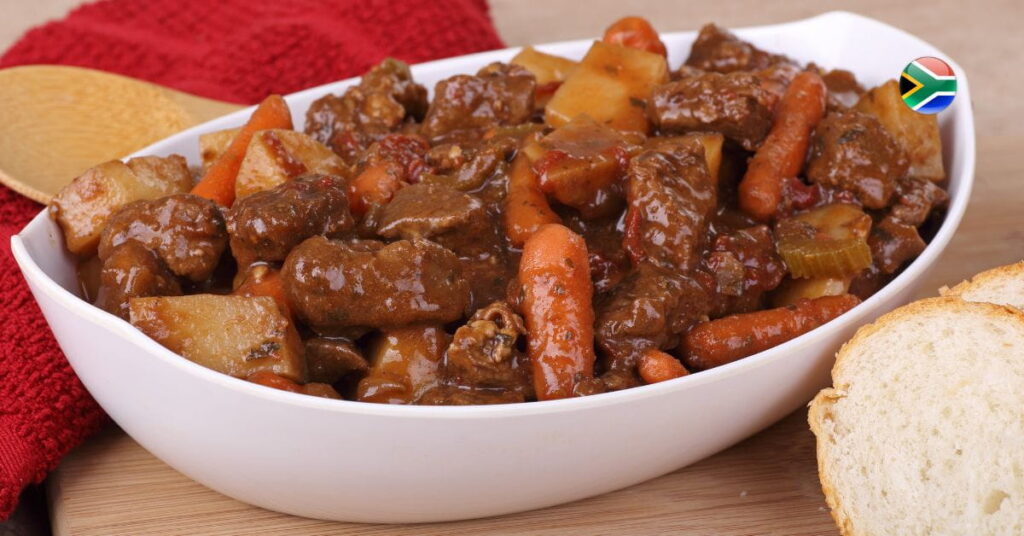
Gathering around a crackling fire with friends and family is a cherished South African tradition. At the heart of these gatherings is the potjie, a three-legged cast-iron pot that simmers for hours, melding flavours into a rich, comforting meal. This slow-cooking method is more than just a way to prepare food; it’s a cultural experience. Today, we’re exploring a classic with a twist: the delicious beef and beer potjie. This recipe combines tender beef with the malty depth of a good brew, creating a truly memorable South African stew potjie.
The culture of the South African potjie
The potjie (pronounced “poy-kee”) is a direct descendant of the Dutch oven, brought to South Africa in the 17th century. Its unique, round-bottomed shape allows for even heat distribution, making it perfect for cooking over an open fire. Potjiekos is a slow-cooked stew where ingredients are layered and left to simmer gently. Unlike a typical stew, stirring is minimal, allowing each ingredient to cook in its own juices before mingling at the end. This method makes every potjie in South Africa unique.
The role of beer in South African cuisine
Beer is a cornerstone of social life in South Africa, and its role in the kitchen is just as significant. The right South African beer can transform a dish, adding a complex layer of flavour that water or stock alone cannot achieve. When it comes to a beef potjie, the beer’s malty, slightly bitter notes tenderize the meat and create a rich, dark gravy.
There are many beer brands in South Africa to choose from. A classic South African lager, like Castle Lager, provides a crisp, clean base. For a deeper, more robust flavour, many cooks prefer a stout, making it a classic beef and stout combination. Popular choices include the widely enjoyed Carling Black Label, known locally as South African Black Label beer, or the historic Lion Lager from South Africa. Even lighter options like Amstel, Castle Lite, or the flavoured Flying Fish beer can be used, though a traditional lager or stout is often preferred for this beef potjie recipe. Ultimately, the best South Africa beer for your potjie is a matter of personal taste.
The ultimate beef and beer potjie recipe
This beef and beer potjie recipe is designed to serve six people and takes approximately two hours of slow cooking. It’s a perfect centerpiece for a relaxed weekend get-together.
Ingredients:
- 1kg beef, cubed (fillet or a good stewing cut)
- 15ml (1 tbsp) cake flour
- 5ml (1 tsp) paprika
- 15ml (1 tbsp) oil
- 15ml (1 tbsp) butter
- 2 medium onions, thinly sliced 15ml (1 tbsp) white sugar
- 4 carrots, peeled and thinly sliced
- 8 green beans, cut up
- 1 garlic clove, chopped
- 5ml (1 tsp) mixed herbs
- 375ml South African beer (a lager like Castle Beer or Lion Beer is great)
- 250ml beef stock
- 1 packet of tomato soup powder
- 1 bay leaf
- 15ml (1 tbsp) vinegar
- 10ml (2 tsp) cornflour (Maizena)
- Salt and pepper to taste
Method:
- Prepare the meat: Start by coating your cubed beef in a mixture of the flour and paprika. This step helps to create a flavorful crust when you brown the meat.
- Brown the meat: Place your No. 3 potjie pot over a medium-hot fire. Heat the oil and butter together, then add the meat in batches. Brown it on all sides, but don’t cook it through. Once browned, remove the meat from the pot and set it aside.
- Sauté the onions: In the same pot, add the thinly sliced onions and sugar. Cook them slowly, allowing the sugar to caramelize the onions until they are soft and sweet. This forms a delicious flavor base for your South African potjie recipe.
- Layer the vegetables: Add the green beans, carrots, and chopped garlic on top of the onions. Cover the pot with its lid and let the vegetables steam for about 5 minutes.
- Combine and simmer: Return the browned beef to the pot, placing it on top of the vegetables. Now it’s time to create the amazing beef and beer sauce. Stir in the mixed herbs, beef stock, tomato soup powder, bay leaf, and your chosen South African lager. This is the heart of the beef and beer recipe.
- Slow cook to perfection: Place the lid back on the pot and let it simmer slowly for at least an hour, or until the meat is tender. Resist the urge to stir too often; let the potjie work its magic.
- Thicken the gravy: Just before serving, mix the vinegar and cornflour into a smooth paste. Gently stir this mixture into the potjie. Let it simmer for a few more minutes until the gravy has thickened to a rich consistency.
- Season and serve: Season with salt and pepper to your liking. Serve your beef and beer potjie hot, traditionally with rice, pap (a maize porridge), or fresh bread to soak up every last drop of the delicious gravy.

This beef and beer potjie recipe is more than a meal; it’s an invitation to slow down, enjoy good company, and savour the rich flavours of South Africa.
Potjiekos – the essence of South African tradition
A potjie is more than just a meal – it’s an excuse to slow down, gather your favourite people, and fight over who gets to scrape the last bits of gravy from the pot. Give this recipe a try and get a taste of a true South African tradition.
FinGlobal: Tax emigration specialists for South Africans abroad
While perfecting a beef and beer potjie is all about patience, timing, and the right ingredients, getting your cross-border finances right requires the same careful planning, and that’s where FinGlobal can step in to help.
From tax emigration to retirement funds withdrawal, we make cross-border financial matters simple and stress-free.
To inquire about your South African financial emigration, email us at info@finglobal.com or provide your details below. We offer an obligation-free SARS check and a complimentary, no-strings-attached consultation and quote.
Send us a message
Leave your details below including a short message and a financial consultant will contact you.
Licensed South African Financial Services Provider FSP # 42872
You have Successfully Subscribed!
FinGlobal Newsletter Subscription
Subscribe to the FinGlobal newsletter to receive all the latest news and information regarding our services and South African Expats.