


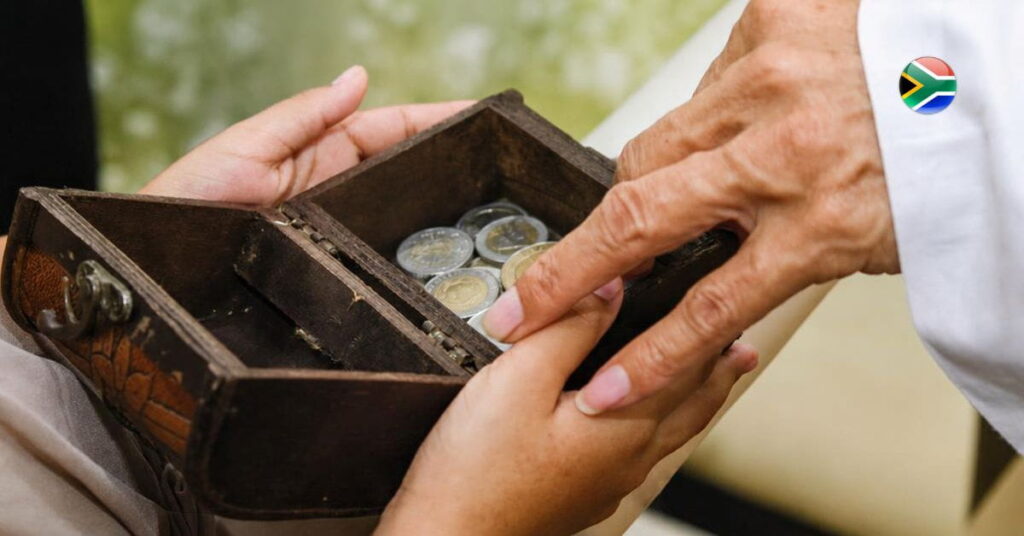
If a relative in South Africa has died and named you as a beneficiary, there are two separate processes that have to be completed. The first is the winding up of the deceased estate in South Africa, handled by the executor under the supervision of the Master of the High Court. The second is moving the funds abroad, which depends on exchange control rules and on your South African tax residency status.
They run in sequence. The estate has to be finalised before anything is due to you, and only then does the transfer question arise.
Winding up an estate and South African estate duty
The death must be reported to the Master of the High Court in the area where the deceased normally lived, within 14 days, by an interested party.
If the estate is worth less than R250 000, the Master may allow a nominated representative to administer the estate.
If it is worth more than R250 000, the process to be followed include the formal appointment of an executor.
The executor collects the assets, settles debts and taxes, and prepares a liquidation and distribution account. Once that account has been advertised, opened for inspection, and approved and stamped by the Master, the heirs can be paid.
Hold on to the stamped final liquidation and distribution account. SARS asks for it later as proof of where the money came from.
Estates can be reported through the Master’s online registration system, so the estate can be registered from anywhere. Original wills still have to be lodged physically.
Understanding South African inheritance tax
There is no inheritance tax in South Africa. What you receive as an heir is treated as a capital receipt rather than as taxable income.
The taxes apply to the estate itself, before anything reaches you:
- Estate duty. This is levied on the worldwide property and deemed property of someone who was ordinarily resident in South Africa, and on the South African property of non-residents. An abatement of R3,5 million is deducted from the net value of the estate to arrive at the dutiable value. Duty is charged at 20% on the first R30 million of that value and 25% on anything above R30 million.
- Capital gains tax. On death, the deceased is treated as having disposed of their assets at market value, which triggers a CGT event in their final tax return. That CGT is settled before estate duty, and the amount paid is deductible in the estate duty calculation.
- Tax where you live. Your own country may still tax you on what you receive. A double taxation agreement may or may not help, depending on the country and the type of tax. Take local advice before the money lands in your account.
Getting the money out
Your tax residency status with SARS, and whether you hold a valid South African ID, decide which route applies to you.
- You are still a tax resident and hold a valid South African ID
You can use your single discretionary allowance. The SDA for residents aged 18 and older was increased from R1 million to R2 million per calendar year, effective 8 April 2026. Transfers within the SDA need no SARS Approval for International Transfer (AIT) PIN and no Reserve Bank sign-off. You generally provide proof of identity, banking details and the purpose of the transfer.
Above R2 million, you move into the R10 million foreign capital allowance, which requires an AIT tax compliance status PIN from SARS. Above R10 million, you also need approval from the Reserve Bank’s Financial Surveillance Department, which will look at both the source of the funds and the purpose of the transfer.
Read more: Your R2 million global opportunity: making the most of the new SDA limit.
- You have ceased tax residency and are no longer active on the SARS database
SARS applies a concession here. If you ceased to be a tax resident, are no longer active on the SARS registered database, and have received an inheritance or life insurance policy of up to R10 million, you do not need to apply for a Manual Letter of Compliance to transfer the funds. For amounts above R10 million, the letter is required.
Read more: What supporting documents does SARS require with the AIT application?
Read more: Don’t let SARS delay your international transfer

If you inherit property rather than cash
If you inherit a South African property and then sell it, the source of the funds changes from an inheritance to the proceeds of a property sale, and different rules apply.
Getting your inheritance out of South Africa
- Ask the executor where the estate is in the process, and whether the liquidation and distribution account has been lodged. Your transfer paperwork cannot be finalised before the estate is.
- Confirm what SARS has on record as your tax residency status. This determines which of the four routes applies to you.
- Check whether you hold a valid South African ID. If you are still a tax resident and cannot produce one, resolve this first.
- Work out roughly what you are inheriting. The R2 million, R10 million and above R10 million thresholds each attract a different level of approval.Open a South African bank account in the right category for your status.
- Gather your paperwork. Requesting the bank statement is the last step. It forms part of the AIT application and has to be submitted within 14 days of being issued.
Read more: SARS and deceased estates: steps before an inheritance is paid out
Read more: Winding up a deceased estate in South Africa
How FinGlobal can help with crossborder inheritance
Accessing a South African inheritance from abroad means dealing with an executor, the Master’s office, SARS and an authorised dealer, in the right order and with matching paperwork. FinGlobal handles tax emigration, tax compliance and AIT applications, and international money transfers, so the estate side and the transfer side line up.
Leave your details below and one of our cross-border specialists will be in touch.
This article is written by Hano Vermaak, Expat Financial Specialist at FinGlobal.
Send us a message
Leave your details below including a short message and a financial consultant will contact you.
Licensed South African Financial Services Provider FSP # 42872
You have Successfully Subscribed!
FinGlobal Newsletter Subscription
Subscribe to the FinGlobal newsletter to receive all the latest news and information regarding our services and South African Expats.