


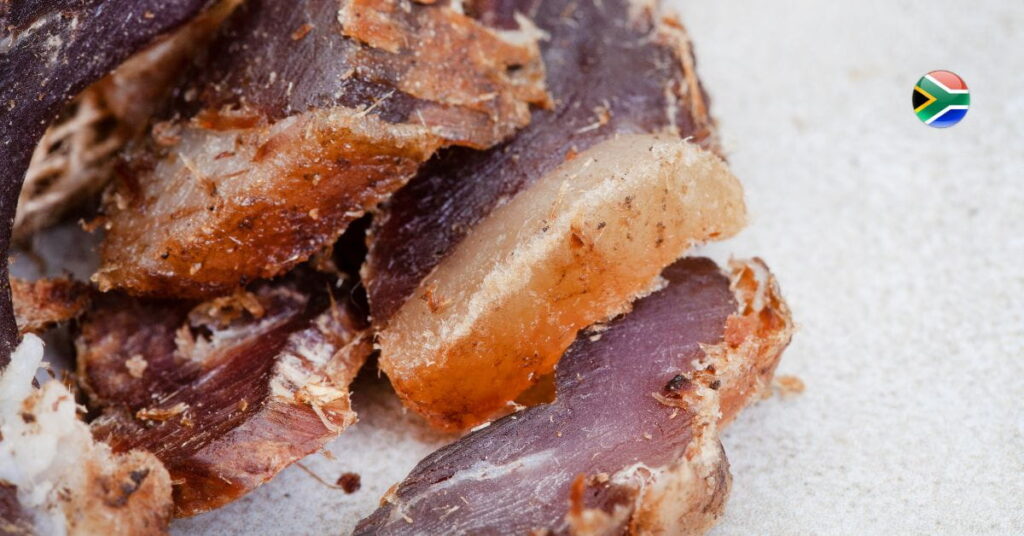
There’s nothing quite like it. That deep, spiced aroma. The satisfying chew. The way a thick slice of wet and fatty biltong melts on your tongue. For South Africans living abroad, homemade biltong is more than a snack — it’s a small piece of home on a plate. Geelvet biltong, named for the distinctive yellow fat (geelvet means “yellow fat” in Afrikaans) that runs along the cut, is widely regarded as the most flavourful and indulgent style of biltong you can make. It’s moist, richly marbled, and absolutely worth the effort.
This guide walks you through the best South African biltong recipe for geelvet, including the marinade, the drying method, and the tips that separate good biltong from truly exceptional biltong.
What is geelvet biltong — and why is it different?
Not all biltong is created equal. Standard beef biltong recipes often use lean cuts, resulting in a drier, firmer finished product. Geelvet biltong, by contrast, is made from cuts that retain a thick layer of yellow fat along the edge. That fat is the secret. During the biltong making process, the fat slowly renders and keeps the meat moist, producing a texture that’s softer and more flavoursome than leaner varieties. It’s what biltong purists seek out — and for good reason.
What is the best meat for making biltong?
The best cut for geelvet biltong is silverside or topside with the fat cap intact. Ask your butcher specifically for a cut with a good layer of fat — ideally at least 1–2 cm. Other suitable cuts include:
- Rump — excellent marbling and flavour
- Thick flank — a budget-friendly option that still delivers well
- Outside round — a classic choice for authentic biltong
Avoid overly lean cuts like eye of round if you’re going for that traditional wet and fatty biltong finish.
The best biltong marinade recipe
The biltong marinade is where the magic starts. Get this right, and everything else follows.
Ingredients (for 1 kg of beef)
- 1 kg beef (silverside or topside with fat)
- 60 ml brown grape vinegar (or apple cider vinegar)
- 30 ml Worcestershire sauce
- 15 g coarse salt
- 10 g brown sugar
- 15 g toasted, coarsely ground coriander seeds
- 5 g ground black pepper4
- 5 g bicarbonate of soda (optional — helps tenderise the meat)
This biltong spice recipe is the foundation of most authentic South African biltong recipes. Coriander is non-negotiable — it’s what gives biltong its characteristic flavour.
How to prepare the marinade
- Slice the meat with the grain into strips approximately 2–3 cm thick. Thicker cuts produce wetter biltong; thinner cuts dry faster and produce a firmer result.
- Combine the vinegar and Worcestershire sauce in a flat dish. Lay the meat strips in the liquid and turn to coat. Leave for 30 minutes.
- Sprinkle the dry spices — salt, sugar, coriander, and pepper — evenly over the meat. Press the spices into the surface.
- Cover and refrigerate for 12–24 hours, turning once halfway through.
The vinegar acts as a mild cure and helps prevent bacterial growth during drying. Don’t skip it.
How to dry geelvet biltong at home
Once your meat is marinated, you have two primary options: a biltong dehydrator or an oven.
Biltong dehydrator recipe
A dedicated biltong dehydrator is the best tool for making biltong at home. It circulates air at low temperature — typically between 30°C and 40°C — mimicking the slow, cool-air drying environment that produces traditional South African biltong.
Steps:
- Hang the marinated strips using biltong hooks or paperclips in the dehydrator.
- Set the temperature to 35–40°C with the fan running continuously.
- Dry for 3–5 days depending on thickness and your preferred texture.
- Check after day 3 — press the meat to test firmness. For wet and fatty biltong, remove when the outside is dry but the centre still has some give.
A biltong dehydrator recipe at this temperature range preserves the enzymes in the meat and develops deeper flavour compared to higher-heat methods. This is the closest result to authentic biltong made in South Africa.
Biltong in oven — an easy alternative
No dehydrator? Biltong in the oven works well too, with a few adjustments.
Steps:
- Preheat your oven to its lowest possible setting — ideally 50°C or below. Prop the door open slightly with a wooden spoon to allow moisture to escape.
- Place strips on a wire rack over a lined baking tray.
- Dry for 3–4 hours, then check and continue until you reach the desired texture.
- For a biltong recipe that’s easy and quick, the oven method can produce good results — though the flavour profile tends to be slightly less developed than slow-dried biltong.
Some people also use a box fan with skewers inserted through the top of a cardboard box — a simple and effective DIY solution widely used across the South African expat community.
Tips for the best homemade biltong
Making biltong at home takes a little practice, but these tips will fast-track your results:
- Toast your coriander — Lightly toast whole coriander seeds in a dry pan before grinding. This single step dramatically improves depth of flavour.
- Don’t over-marinate — More than 24 hours in the biltong marinade can make the meat too soft and affect the texture during drying.
- Keep the fat on — This is geelvet biltong. Do not trim the fat. The yellow fat cap is the whole point.
- Control humidity — High humidity slows drying and increases the risk of mould. If you live in a humid climate, a dehydrator with a fan is especially useful.
- Slice against the grain to serve — Once dried, slice the biltong across the grain with a sharp knife for the best texture.
How long does homemade biltong last?
Properly dried biltong stored in a paper bag or breathable container at room temperature will last 1–2 weeks. If stored in the fridge, it can last up to a month. Avoid airtight plastic bags, which trap moisture and can cause mould. For longer storage, vacuum-seal portions and freeze for up to 6 months.

Bring a bit of South Africa to your kitchen with geelvet biltong
Making your own biltong at home isn’t just about the food — it’s about preserving a connection to something familiar. Whether you’re living in Sydney, London, or Toronto, the smell of biltong spice and vinegar in your kitchen has a way of cutting through the distance. Start with this geelvet biltong recipe, follow the biltong making process carefully, and adjust to your taste over time. The beauty of homemade biltong is that it’s yours to perfect.
FinGlobal: Helping South Africans Abroad with tax emigration
Whether you’re enjoying a homemade batch of geelvet biltong in South Africa or abroad, FinGlobal is here to help South Africans around the world with trusted cross-border financial services, from tax emigration to retirement fund withdrawals and more.
To get started with your free, 100% confidential, no-obligation SARS assessment, leave your contact details below and we’ll be in touch soon
Send us a message
Leave your details below including a short message and a financial consultant will contact you.
Licensed South African Financial Services Provider FSP # 42872
You have Successfully Subscribed!
FinGlobal Newsletter Subscription
Subscribe to the FinGlobal newsletter to receive all the latest news and information regarding our services and South African Expats.